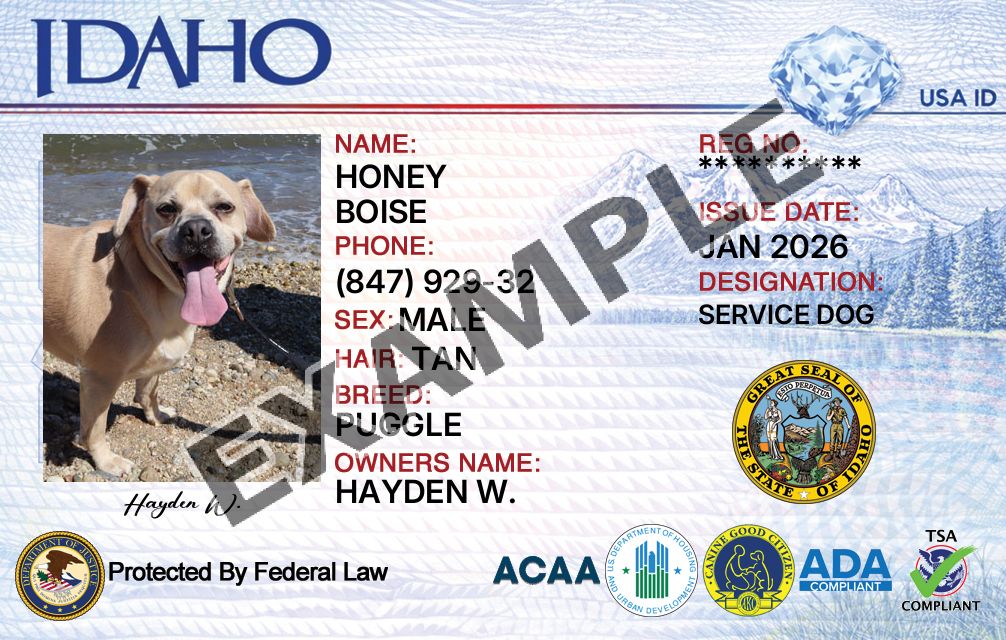
If you’re asking, “where do I register my dog in Idaho for my service dog or emotional support dog”, the most important thing to know is this: in Idaho, there typically isn’t a single statewide “service dog registry” or “emotional support dog registration” that makes a dog official. What most people actually need is a dog license in Idaho (sometimes called a pet license) issued by their city, county, or local animal control.
This page explains where to register a dog in Idaho for licensing purposes, how animal control dog license Idaho rules are commonly enforced, what to expect for rabies vaccination requirements, and how licensing is different from a dog’s legal status as a service dog or an emotional support animal (ESA).
Where to Register or License Your Dog in Idaho
Because licensing is usually handled locally, where to register a dog in Idaho depends on where you live (city limits vs. unincorporated county areas). Below are examples of official offices in Idaho that publish dog licensing, animal control, or rabies enforcement information. If you don’t see your area listed, search your city or county website for “dog license,” “animal control,” or “rabies.”
City of Boise — City Clerk’s Office (Licensing)
City of Meridian — City Clerk’s Office (Dog Licensing)
Idaho Humane Society — Animal Care & Control (Ada County)
Kootenai County Sheriff’s Office — Animal Control
City of Coeur d’Alene — Police Department (Animal Control)
City of McCall — McCall Police Department (Dog Licensing)
Overview of Dog Licensing in Idaho
Idaho licensing is usually local (not statewide)
Idaho does not operate a single, universal dog licensing office for every resident. Instead, dog license in Idaho requirements are commonly created and enforced through city ordinances and county ordinances. In practice, that means the answer to where to register a dog in Idaho is usually: your city clerk’s office, local animal control, or a designated local agency that handles pet licensing.
What a dog license is (and what you get)
A dog license is a local registration that connects your dog to you in local records and typically provides a numbered tag for the dog’s collar. Many Idaho jurisdictions require the tag to be worn. Licensing can support animal control operations, reunite lost dogs with owners, and help officials confirm compliance with vaccination rules.
Which agencies typically handle enforcement
Licensing is frequently linked to animal control dog license Idaho enforcement and rabies response. Depending on the area, the responsible agency may be:
- A City Clerk or city licensing office (common for cities that issue local tags)
- A Police Department Animal Control division (some cities place animal control under police)
- A County Sheriff’s Office Animal Control unit (some counties enforce licensing/animal control ordinances)
- A contracted animal care and control provider working on behalf of local governments
How Dog Licensing Works Locally in Idaho
Step 1: Identify your jurisdiction (city limits vs. county)
Start by confirming whether your address is inside city limits. This matters because the rulebook and licensing office can change within a few miles. For example, a city may require annual licensing and tags, while an unincorporated county area may follow a different ordinance or process.
Step 2: Prepare the typical documents
While details vary, most local licensing programs ask for documentation that helps confirm basic compliance and ownership. Your jurisdiction may require proof of rabies vaccination and may offer different fees depending on whether your dog is altered (spayed/neutered) or intact.
Step 3: Apply and renew on the local schedule
Many cities and counties issue licenses for a set term (often one year). Some locations may allow multi-year purchases, while others renew yearly on a calendar basis. Always read your local instructions carefully, because deadlines, late fees, and renewal cycles are local decisions.
Rabies vaccination requirements (why they matter for licensing)
Across Idaho, rabies rules are tightly connected to animal control and bite investigations. Many local licensing programs require a current rabies vaccination certificate as a condition of licensing (or require dogs to be current on rabies vaccinations as part of their animal control ordinances). If your dog is not current, you may be unable to obtain or renew a license, and your dog may face stricter handling requirements after a bite incident.
Practical tip for “registration” questions
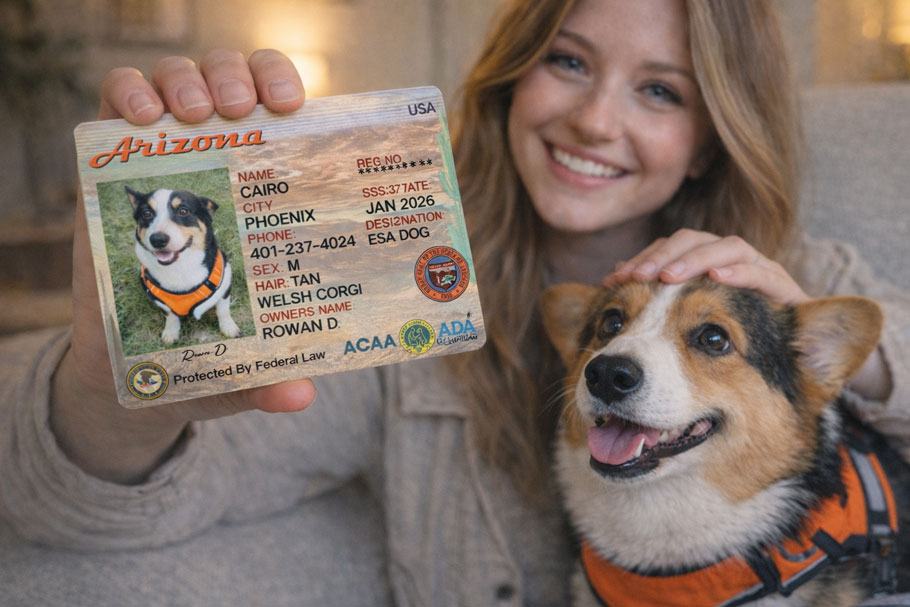
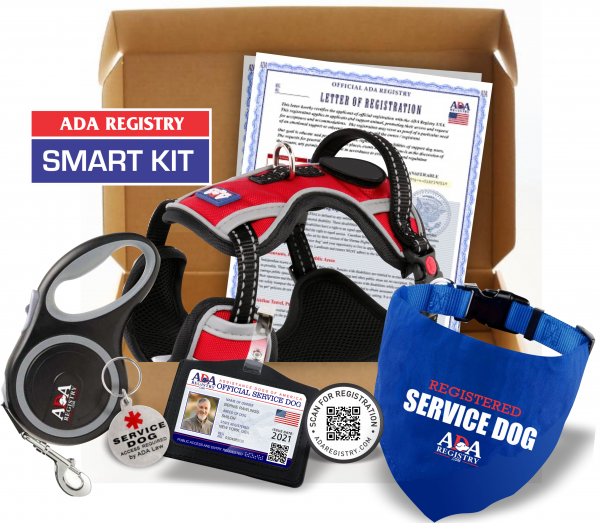
If someone is trying to sell you an online “certificate,” “ID card,” or “national registry” for service dogs or ESAs, that is usually not the same thing as a local dog license and is not what most Idaho cities/counties mean by “registering” your dog. For local compliance, focus on your city/county licensing office and rabies documentation.
Service Dog Laws in Idaho
Service dog vs. dog license: two different concepts
A service dog is not “created” by a registration database. Service dog status is based on the dog being individually trained to do work or perform tasks for a person with a disability. A dog license is simply the local pet licensing requirement that may apply to all dogs—pet dogs, service dogs, and dogs in training—depending on local rules.
Public access: what businesses may ask
Under ADA-style rules referenced by Idaho courts and disability access standards, a service animal is generally a dog trained to perform disability-related tasks. In typical public-access situations, staff generally are not supposed to demand “papers” or certification as a condition of entry, although they may ask limited questions allowed by law. A business can require that a service dog be under control and may remove a dog that is out of control or not housebroken.
Idaho state law and service dogs
Idaho law recognizes the right of an individual with a disability to be accompanied by a service dog in certain places open to the public, with the handler responsible for any damages caused by the dog. This is separate from local licensing rules and does not automatically eliminate your need to comply with local rabies or dog licensing ordinances.
Emotional Support Animal Rules in Idaho
An ESA is not a service dog
An emotional support animal (ESA) generally provides comfort by its presence, but it is not individually trained to perform a specific task for a disability in the same way a service dog is. As a result, ESAs generally do not have the same public-access rights as service dogs in restaurants, stores, or other public places.
Where ESAs matter most: housing
ESA rules most often come up in housing (rentals, leases, HOAs/condos) as part of disability-related anti-discrimination requirements. Idaho’s fair housing framework prohibits disability discrimination in housing contexts, and federal fair housing protections are commonly the main basis for requesting an accommodation for an assistance animal. Practically, this may mean requesting an exception to a “no pets” rule or pet restrictions when the animal is needed due to disability-related reasons.
ESAs and “registration”
If you’re searching where do I register my dog in Idaho for my service dog or emotional support dog because a landlord asked for “registration,” ask what they mean. Many housing providers actually need reliable documentation supporting the accommodation request (when allowed) rather than a purchased online registry ID. This is separate from your city/county dog license in Idaho requirements, which are about local compliance and identification tags.
Frequently Asked Questions
Disclaimer
Licensing requirements and office locations may change. Residents should verify details with their local animal services office within Idaho.